

The Specimen Library / Record
Labradorite
Plagioclase feldspar / mineral
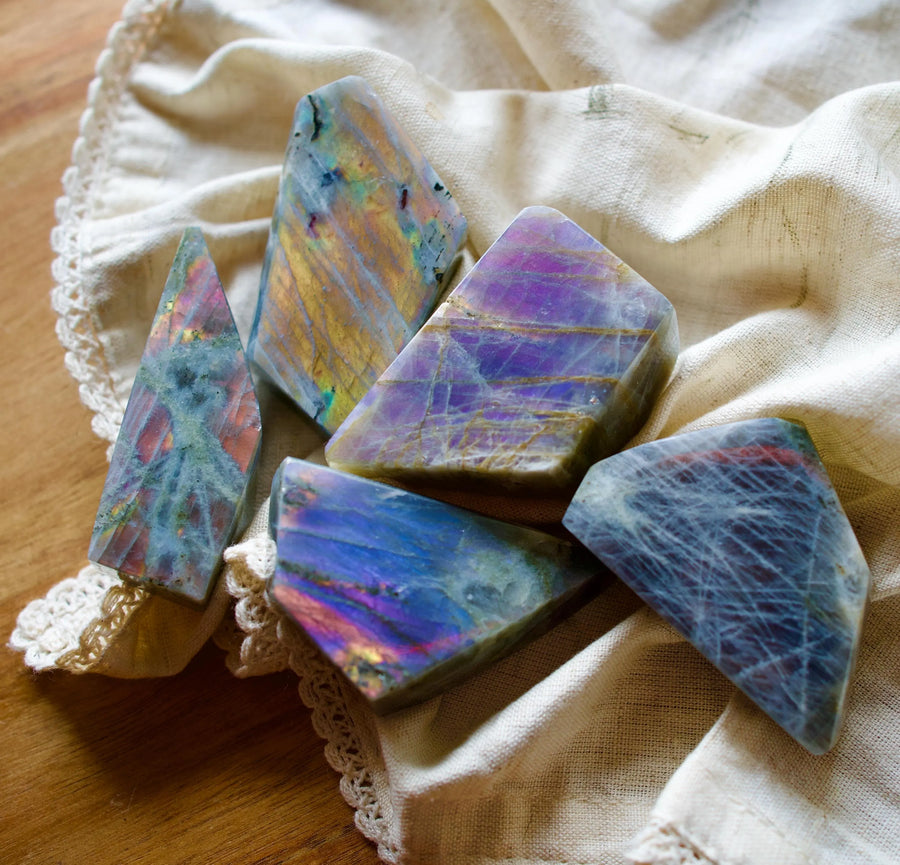
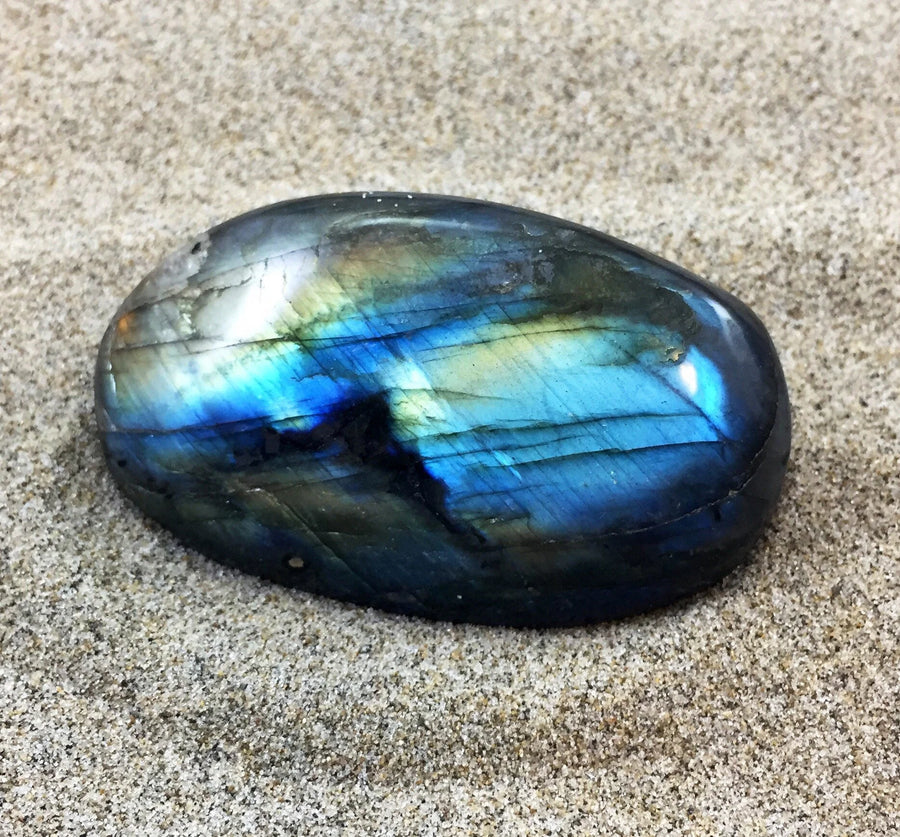
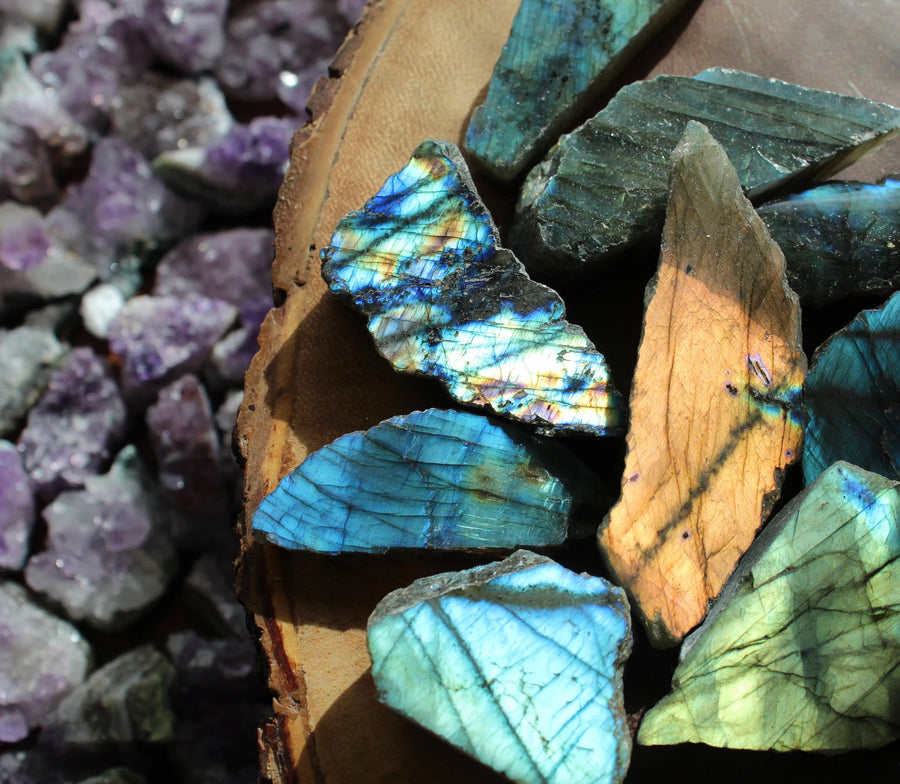
Labradorite can look quiet until light reaches it at the right angle. The shifting blue, green or gold flash is an optical effect within the feldspar, not a surface coating.
← Return to the Specimen Library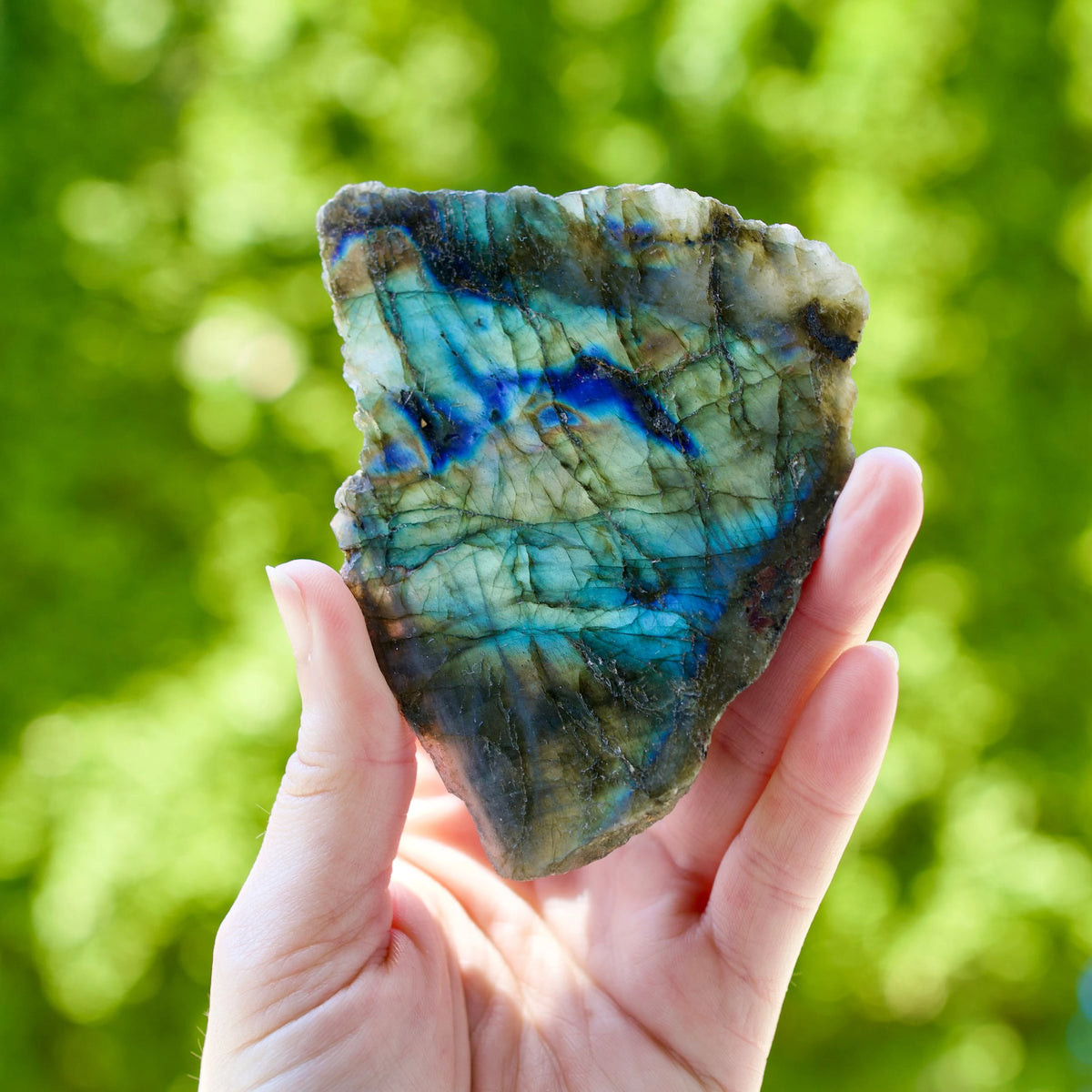
01 · The material
Natural History
Labradorite is a plagioclase feldspar found in igneous rocks. Fine internal layers interact with light to produce labradorescence.
02 · Observe
Under the Loupe
Tilt the specimen in directional light to find the flash. A single photo can hide it or exaggerate it; the effect's angle and extent vary.
03 · Ownership
Collect & Care
Protect cleavage surfaces from knocks. Use a soft cloth and gentle cleaning; avoid steam, ultrasonic cleaning and sudden temperature changes.
04 · The human story
History, Lore & Tradition
Documented history
Labradorite’s name connects it with Labrador, but its name cannot establish the origin of an individual specimen. Widely repeated northern-lights legends need traceable cultural sourcing before inclusion.
Meanings & modern crystal practice
These associations belong to spiritual traditions and personal symbolism, distinct from mineralogical facts.
Modern crystal practice associates labradorite with intuition, transformation and spiritual protection. Its changing flash can be a personal metaphor for perspective without becoming evidence of a supernatural effect.
Sources & further reading
References are labeled by role. A source documenting a belief is not evidence of a medical or mineralogical effect. Reflection prompts are C&C editorial suggestions.
- Mineral family · University of Waterloo Earth Sciences Museum: Feldspar
- Optics research · Jin and colleagues, GIA, 2025: Structures Behind the Spectacle
- Gem names and optics · GIA: Optical effects in phenomenal cabochons
- Collection care · Natural History Museum: Sparkling, sensitive and toxic
- Mineral naming context · University of Waterloo Earth Sciences Museum: Feldspar
- Contemporary belief example · Energy Muse (not scientific or medical evidence)
The cabinet
Filed Under
Follow the question
Go deeper
Take it with you
Field resources in development
- Collector Record · future free download
- Quick Reference · future free download
- Coloring & Discovery Page · future low-cost resource
The cabinet