

The Specimen Library / Under the Loupe
Labradorite · Science
Plagioclase feldspar / mineral
A closer look beyond the specimen label.
← Return to Labradorite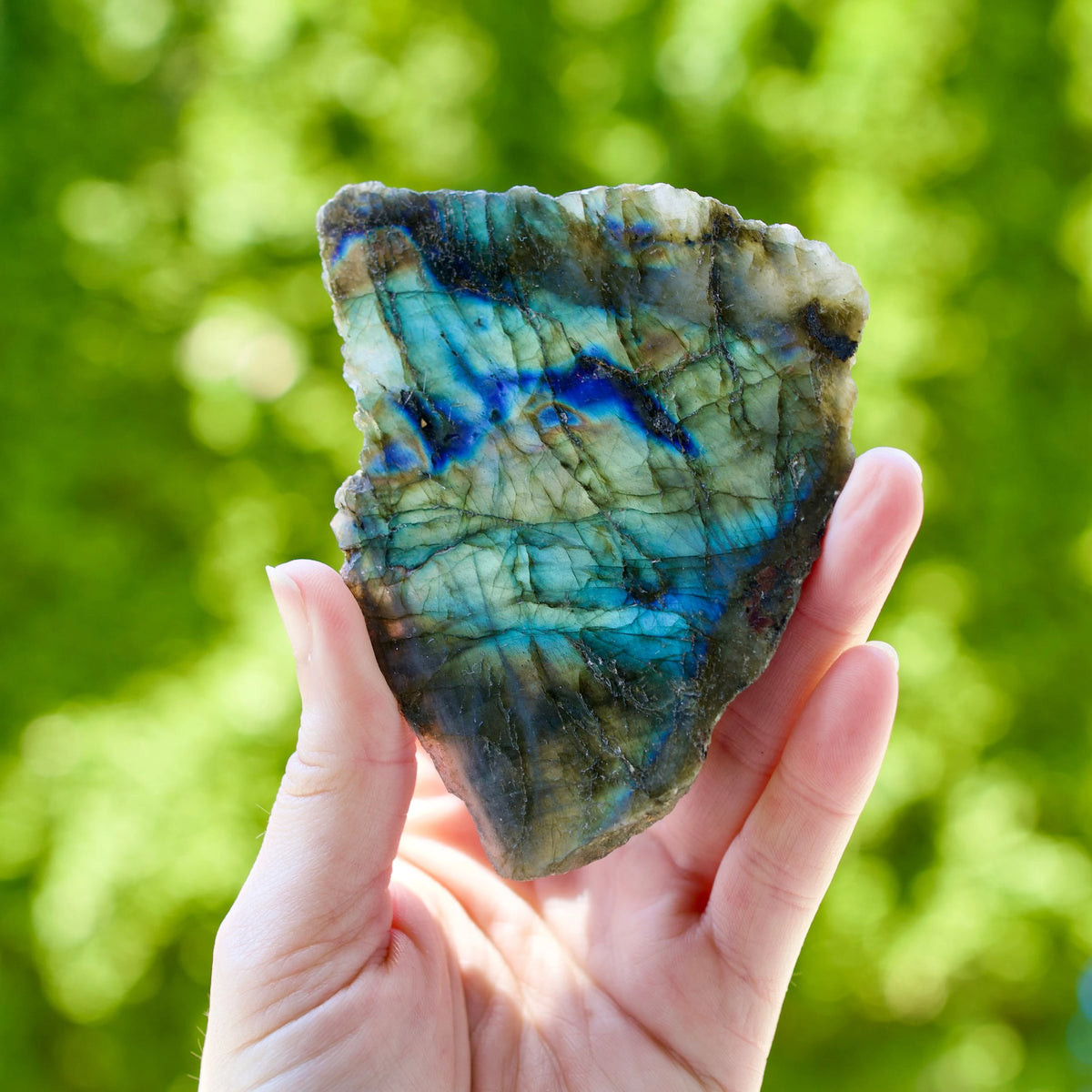
The material, examined
A name within a mineral series
Labradorite belongs to the plagioclase feldspars, a series with changing sodium and calcium proportions. The traditional name covers an intermediate compositional range, rather than one fixed chemical recipe.
For a useful cabinet label, “plagioclase feldspar” explains its family; “labradorite” identifies the compositional name in common mineral and gem use. A simplified formula describes the series, not a laboratory analysis of your particular stone.
The flash is inside the stone
Labradorescence comes from light interacting with very fine internal layers. Reflection and interference favor particular wavelengths, creating a directional flash. The effect changes as the stone, light source or your viewing angle moves.
A gray surface and a brilliant blue photograph can be the same specimen viewed differently. The color of the flash is an optical effect; a purple flash does not create a separate purple mineral variety.
Names that overlap in the marketplace
Spectrolite is a trade name associated with Finnish labradorite. “Rainbow moonstone” commonly refers to transparent feldspar material identified as labradorite; moonstone terminology elsewhere can describe different feldspars.
Trade names do useful work only when they are accompanied by an actual identity. Ask about the material, stated origin and optical effect separately. A rainbow effect alone cannot establish locality.
Finding the viewing angle
Move a specimen slowly under one lamp rather than flooding it with light from every direction. A useful photo set includes the strongest flash and the quieter body appearance. That gives a more honest picture of how it behaves.
Feldspar cleavage means a knock can matter even when the polished surface looks sturdy. Keep it separate from harder minerals, avoid ultrasonic or steam cleaning, and use gentle cleaning appropriate to any coating, repair or setting.
Sources & further reading
References are labeled by role. A source documenting a belief is not evidence of a medical or mineralogical effect. Reflection prompts are C&C editorial suggestions.
The cabinet