

The Specimen Library / Under the Loupe
Selenite / Gypsum · Science
Gypsum / trade-name questions
A closer look beyond the specimen label.
← Return to Selenite / Gypsum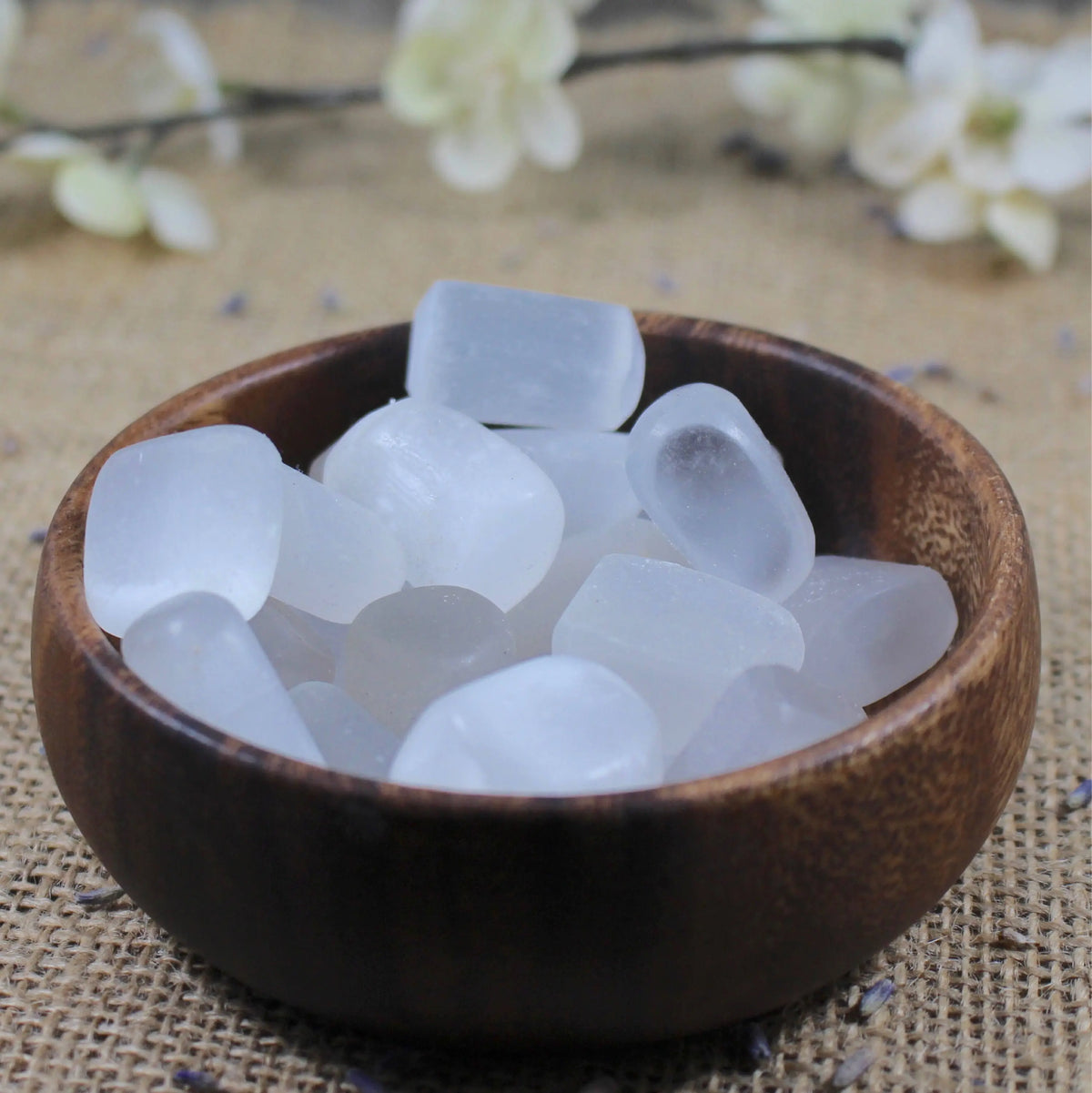
The material, examined
Start with the species: gypsum
Gypsum is calcium sulfate dihydrate, CaSO₄·2H₂O. Water is part of its crystal structure. Selenite, satin spar and alabaster are familiar names for different appearances or habits of gypsum, not three unrelated mineral species.
In mineral use, selenite generally describes clear crystalline gypsum. The silky white fibrous pieces frequently sold as selenite in crystal shops are more accurately described as satin spar gypsum. Keep the familiar search name, but explain the material.
Different forms, different observations
Fibrous satin spar shows a silky directional sheen. Clear selenite lets you observe transparency and cleavage more directly. Fine-grained massive gypsum may be called alabaster.
“Satin spar” can also be used for fibrous calcite, and “alabaster” has been used for calcite objects. A trade or craft name therefore needs a mineral identity alongside it. Neither whiteness nor a silky surface is enough on its own.
A mineral that travels with water
Gypsum can form as dissolved material crystallizes from evaporating water. At White Sands, the National Park Service describes rain and snowmelt dissolving gypsum in surrounding mountains, with mineral-bearing water collecting in a basin and crystals growing as water evaporates.
The dunes show the next stage: gypsum crystals break down into sand. A cabinet specimen and a vast landscape can be different moments in the same material’s story.
Soft enough to need a different routine
Gypsum is approximately Mohs 2 and is vulnerable to scratching and cleavage. Water can dissolve it; immersion is not a sensible cleaning method. Use gentle dry dusting and avoid oils, salt, chemical cleaners and heat.
Support fibrous pieces and protect them from harder stones. A polished charging plate still needs ordinary material care. A ritual name does not make it heatproof, waterproof or physically able to clean another specimen.
Sources & further reading
References are labeled by role. A source documenting a belief is not evidence of a medical or mineralogical effect. Reflection prompts are C&C editorial suggestions.
The cabinet