

The Specimen Library / Under the Loupe
Rose Quartz · Science
Quartz / pink variety
A closer look beyond the specimen label.
← Return to Rose Quartz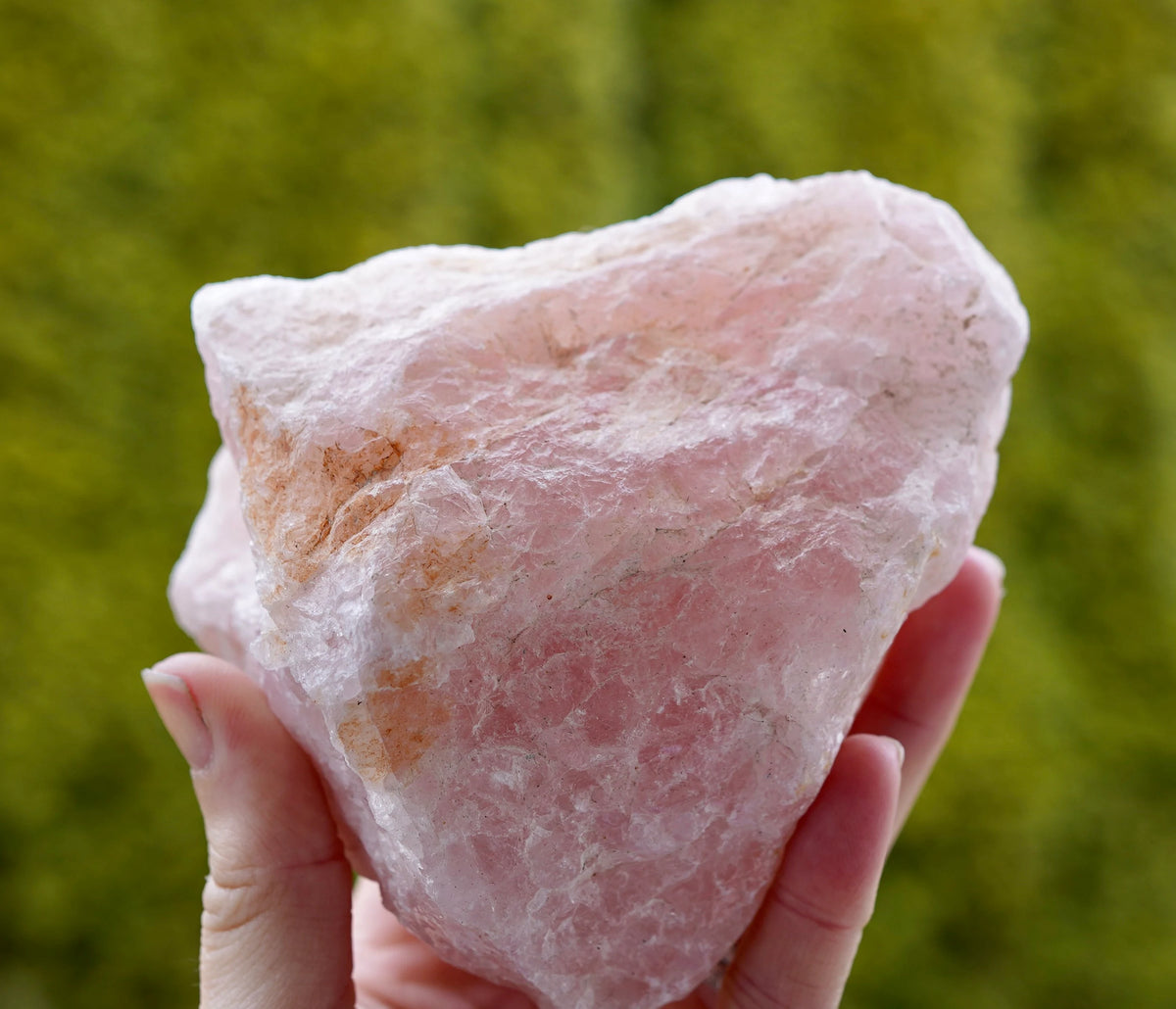
The material, examined
Pink, cloudy and usually massive
The familiar rose quartz used for bowls, carvings and tumbled stones usually occurs as massive material rather than separate well-formed points. “Massive” describes a growth habit; it is not a comment on how large the specimen is.
Its cloudy appearance is part of the material’s character. Transparency is not a universal quality test: what makes an interesting carving can differ from what a faceted-gem buyer wants.
The pink is a smaller story than it looks
Goreva, Ma and Rossman examined tiny pink fibers inside massive rose quartz and linked them to its color. Subsequent microscopy identified the fibers as related to dumortierite, rather than simply loose titanium making quartz pink.
The rare well-formed pink quartz studied in that research did not contain those same fibers. “Rose quartz” in everyday shopping language can therefore hide more than one color story.
Stars and lookalikes
Some rose quartz can show a star-like optical effect when suitable oriented inclusions and the cut interact with a light source. It is a feature of particular material and presentation, not something every pink stone should display.
Pink glass, dyed material and other pink minerals can resemble rose quartz. A pastel color is a clue, not proof. Ask for identity and treatment information instead of relying on an image search alone.
A record for an ordinary-looking stone
Rose quartz is a good reminder that a specimen does not need dramatic points to deserve documentation. Record dimensions, where you obtained it, any stated locality and what the seller disclosed. A simple lump can have a very useful record.
Protect it from impact and keep it out of prolonged intense light. Gentle soapy-water cleaning may suit sound quartz; repairs, coatings or mixed material need individual consideration. Do not use home scratch tests to establish identity.
Sources & further reading
References are labeled by role. A source documenting a belief is not evidence of a medical or mineralogical effect. Reflection prompts are C&C editorial suggestions.
Adjacent drawers
Related Specimens
The cabinet