

THE SPECIMEN LIBRARY / RECORD
Amethyst
Purple variety of quartz
A purple quartz whose color and crystal form invite a closer look at geology, light and the stories people tell about minerals.
← Return to the Specimen Library
01 · The material
Natural History
Formation
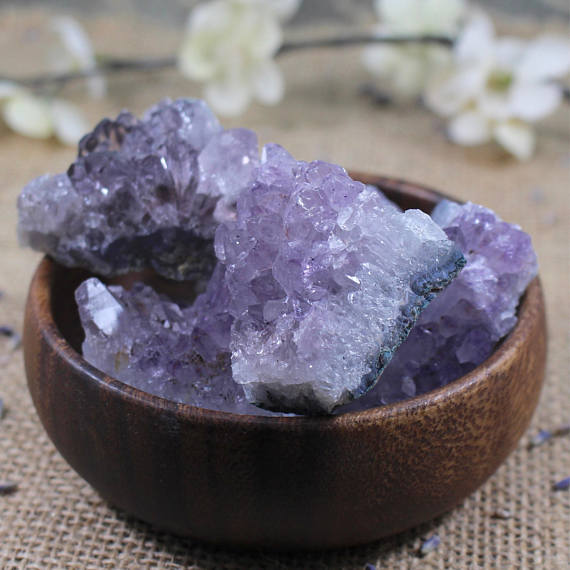
Amethyst grows where quartz can crystallize from silica-bearing fluids, including cavities in volcanic rock and mineral veins. Iron-related color centers and natural irradiation give it its purple color.
Physical character
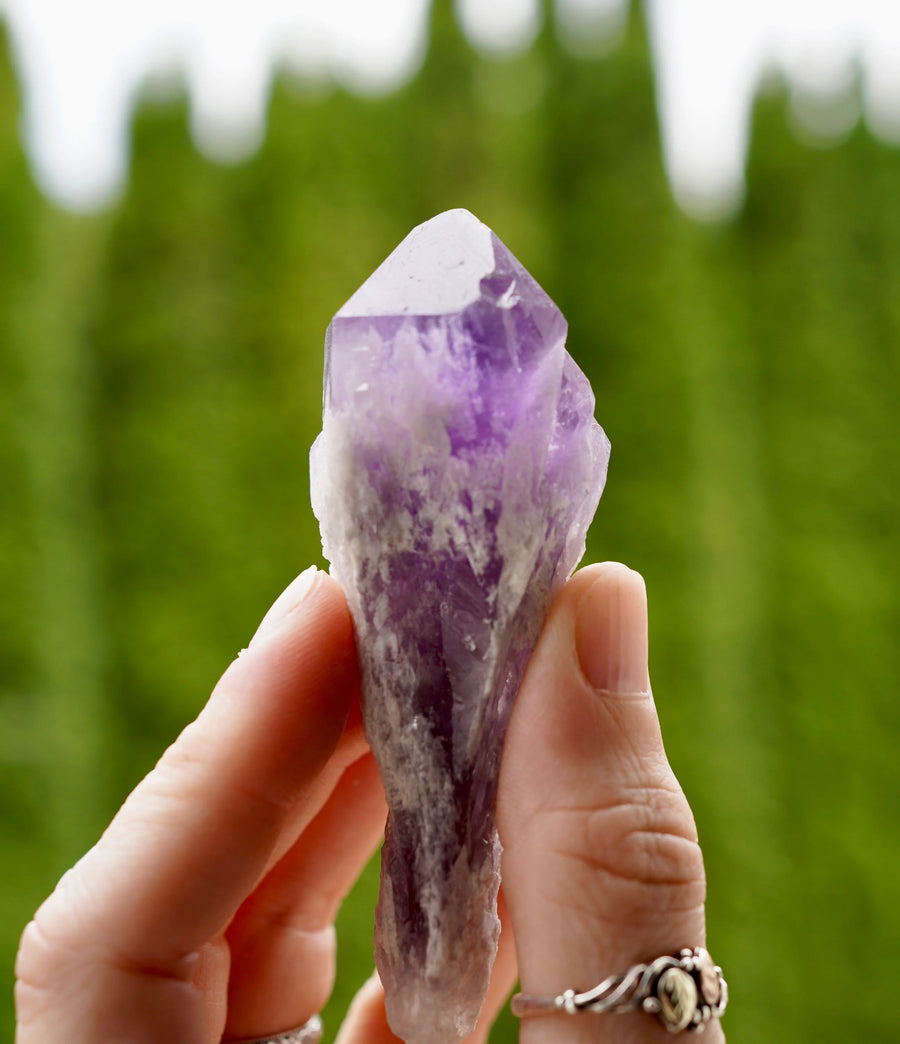
Six-sided prisms and pointed terminations are familiar quartz forms. Color may vary from a pale base to purple tips or form bands within a crystal.
Occurrences
Brazil and Uruguay are familiar sources of amethyst geodes; vein deposits occur elsewhere, including Newfoundland. A general locality list does not establish the origin of the pictured specimen.
Structure & light
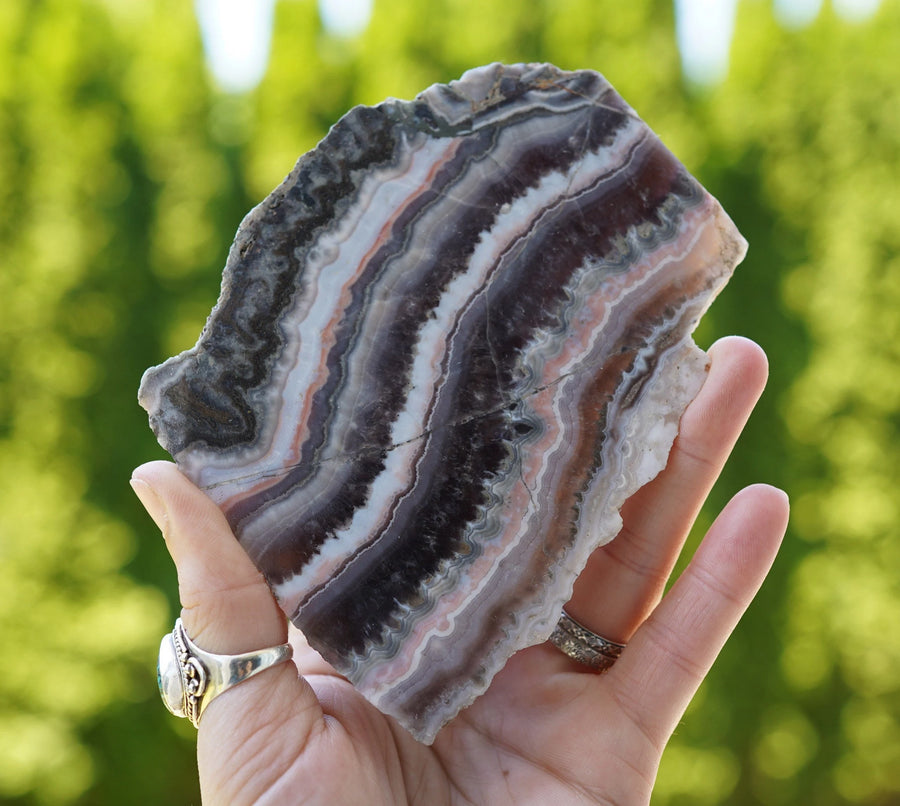
Color centers affect which light the crystal absorbs. Growth zoning can put several shades in one specimen; it does not, on its own, identify a locality or treatment.
02 · Observation
Under the Loupe
Identification clues
A quartz-like crystal habit and purple color are useful starting observations, not a conclusive identification.
Lookalikes & names
Purple fluorite, colored glass and laboratory-grown quartz can enter the same visual conversation. A purple appearance alone does not establish natural amethyst.
Treatments & imitations
Heating can alter amethyst color, sometimes producing yellow or orange quartz sold as citrine. Synthetic amethyst also exists. A photograph cannot reliably rule out treatment or laboratory growth.
Limits of appearance
A visual record cannot certify identity, natural origin, treatment status or geographic provenance.
03 · Ownership
Collect & Care
Fragility & handling
Mohs hardness 7 describes resistance to scratching, not resistance to breakage. Protect pointed crystal tips from knocks and abrupt temperature change.
Physical cleaning
For an intact specimen without delicate attachments or unknown coatings, gentle cleaning with warm, mildly soapy water is generally suitable; rinse and dry thoroughly. If the specimen includes matrix, adhesive or an uncertain treatment, seek specimen-specific advice first.
Water, light, heat & chemicals
Avoid prolonged intense light and heat, which can alter some amethyst color. Avoid steam cleaning and sudden temperature changes. Keep away from aggressive chemical cleaners.
Storage & display
Keep the specimen supported and separate from harder objects or loose items that could chip crystal tips. Choose a stable display spot away from prolonged strong sunlight.
04 · Human history
History & Culture
The Greek name carries the idea of being “not drunk,” preserving a historical belief about preventing intoxication. That is lore, not a protective effect of the mineral.
The British Museum records an Egyptian Middle Kingdom amuletic string containing amethyst beads. The object documents a historical use; it does not establish that its owner followed modern crystal practices.
Meanings & modern crystal practice
This section records historical and contemporary beliefs, symbolism and spiritual practices as part of the material’s human story. These associations are distinct from mineralogical properties and are not medical claims.
Modern crystal traditions associate amethyst with intuition, spiritual awareness and quiet reflection. It can serve as a personal focal point for meditation or journaling, without promising a health outcome.
Sources & further reading
References are labeled by role. A source documenting a belief is not evidence of a medical or mineralogical effect. Reflection prompts are C&C editorial suggestions.
- Mineralogy · Handbook of Mineralogy: Quartz
- Museum specimen · Smithsonian: Amethyst
- Color research · GIA: Amethyst from Boudi, Morocco
- Geological research · GIA: Amethyst from Newfoundland
- Gemology · GIA: Amethyst
- Physical care · GIA: Amethyst care and cleaning
- Historical object · British Museum: Amuletic string EA3095
- Historical name and belief · GIA: Amethyst
- Contemporary belief example · Energy Muse (not scientific or medical evidence)
The cabinet