

The Specimen Library / Under the Loupe
Quartz · Science
Silica / mineral species
A closer look beyond the specimen label.
← Return to Quartz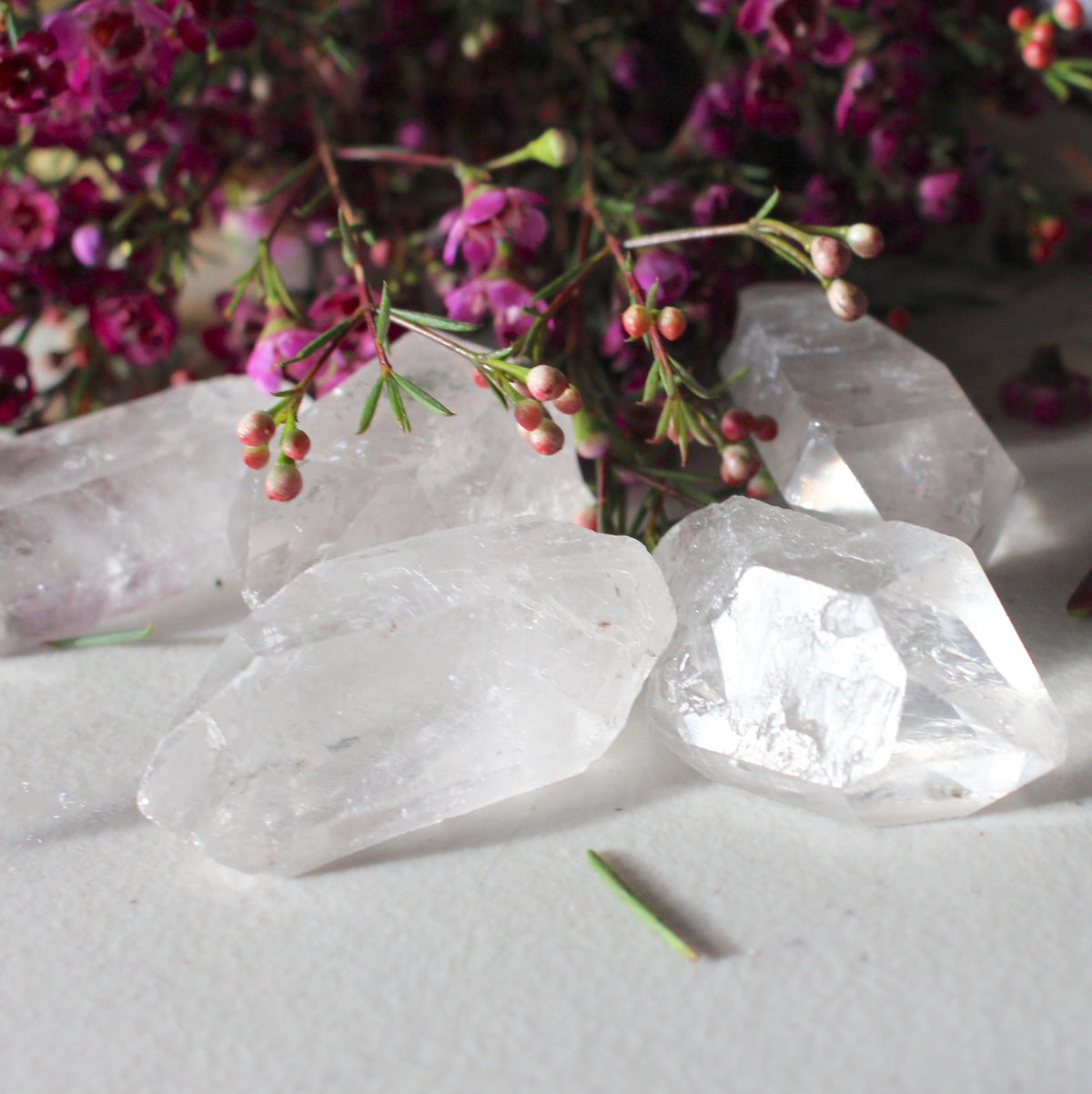
The material, examined
One species, many familiar names
Quartz is silicon dioxide. Amethyst, citrine and rose quartz are varieties of that species, while clear rock crystal is its transparent, colorless expression. A new color name does not automatically mean a new mineral species.
Large visible crystals are only part of the family. Chalcedony is made of extremely fine silica crystals, and agate is a banded form of chalcedony. “Quartz” on a label can therefore cover objects that look nothing alike.
How to read a crystal
A pointed quartz crystal often shows a six-sided outline, even though its crystal system is trigonal. The outside shape and the symmetry of the internal structure are related, but they are not interchangeable labels.
Start with what you can actually observe: faces, growth lines, cloudy areas, fractures and inclusions. Photograph a feature before trying to name it. A visible inclusion may be another mineral, trapped fluid, or simply a fracture catching the light.
Grown underground—or in a laboratory
Quartz occurs in many rocks and in veins where mineral-bearing fluids circulate. Hydrothermal laboratory growth uses a related principle under controlled conditions, with quartz deposited on seed crystals.
Synthetic quartz is a real crystalline material with a manufactured origin. Glass is an imitation, with a different internal structure. Neither clarity nor a “too perfect” appearance proves which one you have; visual guesses have limits.
The crystal in a clock
Quartz has piezoelectric properties: mechanical stress and electrical response are coupled. Carefully prepared quartz resonators are used for precise timing and other electronic applications. That measured behavior belongs to a specific physical system.
It does not demonstrate that a loose specimen broadcasts a healing frequency. The actual physics is worth understanding on its own. For a collection, use gentle handling, separate storage and cleaning suited to the whole specimen—not just its quartz crystals.
Sources & further reading
References are labeled by role. A source documenting a belief is not evidence of a medical or mineralogical effect. Reflection prompts are C&C editorial suggestions.
Adjacent drawers
Related Specimens
The cabinet