

The Specimen Library / Under the Loupe
Pyrite · Science
Iron sulfide / mineral species
A closer look beyond the specimen label.
← Return to Pyrite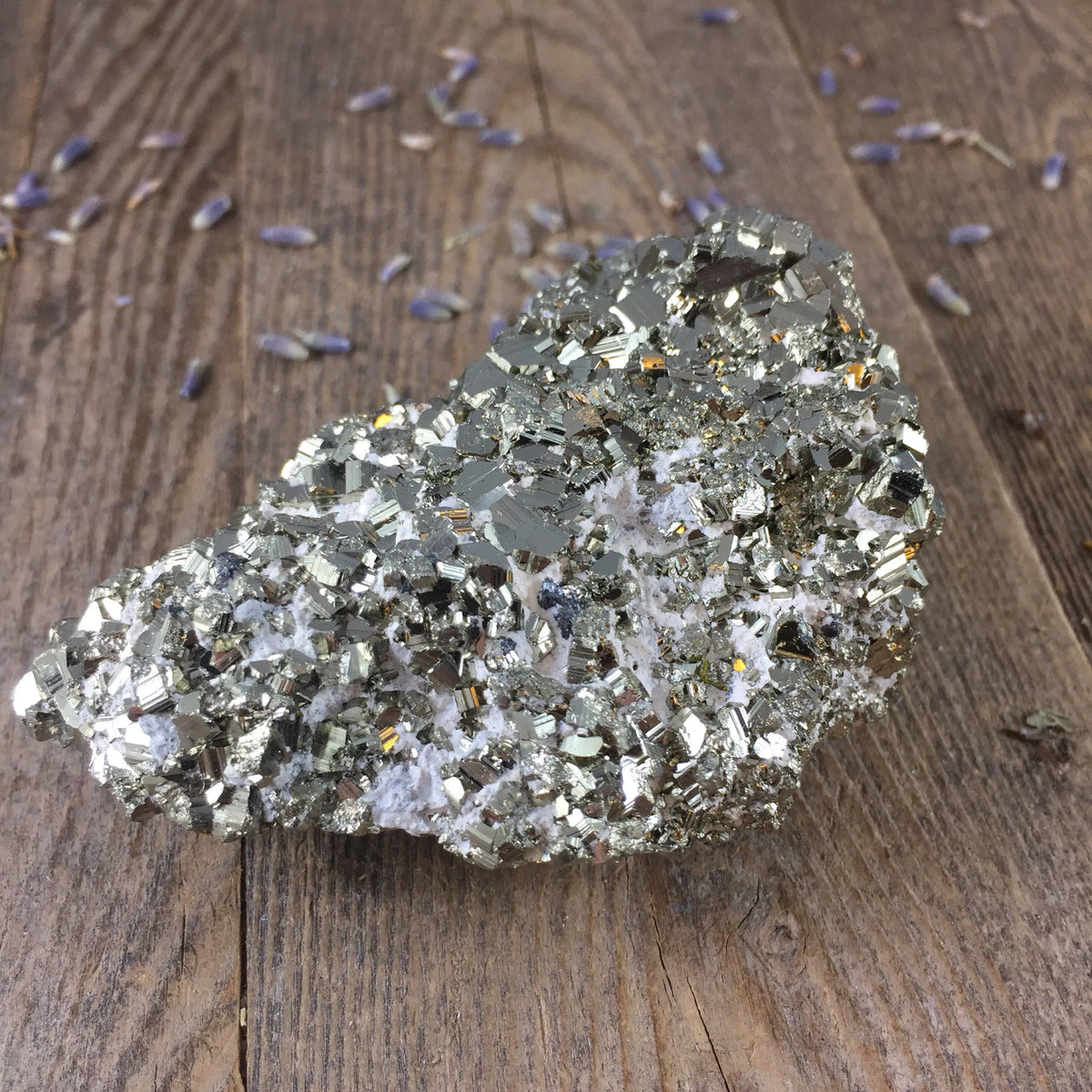
The material, examined
Brass-colored, with a cubic structure
Pyrite is iron sulfide, FeS₂. Its cubic structure can produce cubes and other forms, including pyritohedra—twelve-faced crystals whose faces are pentagons. Fine lines on cube faces are a useful observation to make with a hand lens.
Marcasite has the same chemical formula but a different crystal structure. Same chemistry does not necessarily mean the same mineral. That distinction becomes particularly useful when thinking about stability and care.
Not every glittering grain is gold
Pyrite is harder and more brittle than gold. Gold is malleable; pyrite fractures. Color, shape and context can help distinguish them, but an unknown metallic grain should not be identified from shine alone.
Do not sacrifice a collector specimen to a hammer or scratch test. If value depends on the identity of a metallic material, use an appropriate professional examination instead of a dramatic internet demonstration.
From ore systems to fossils
Pyrite occurs in a wide range of geological settings, including mineral veins and sedimentary rocks. It can form around or replace organic remains, helping preserve details in some fossils.
A mineral’s growth setting matters to the object you own. A solid crystal, a delicate fossil and fine-grained pyrite in a porous matrix may not behave identically after they enter a collection.
Why dry storage matters
Some pyrite-bearing specimens deteriorate when oxygen and moisture drive oxidation. Collectors call this pyrite decay. Not every pyrite cube will crumble, but new powder, cracking or an unusual change deserves attention.
Avoid soaking, saltwater and damp displays. Keep vulnerable pieces separate and seek conservation advice if deterioration appears. Do not brush suspect powder into the air or try a chemical rescue at home. Document the change before deciding what to do.
Sources & further reading
References are labeled by role. A source documenting a belief is not evidence of a medical or mineralogical effect. Reflection prompts are C&C editorial suggestions.
The cabinet