

The Specimen Library / Under the Loupe
Obsidian · Science
Volcanic glass / mineraloid
A closer look beyond the specimen label.
← Return to Obsidian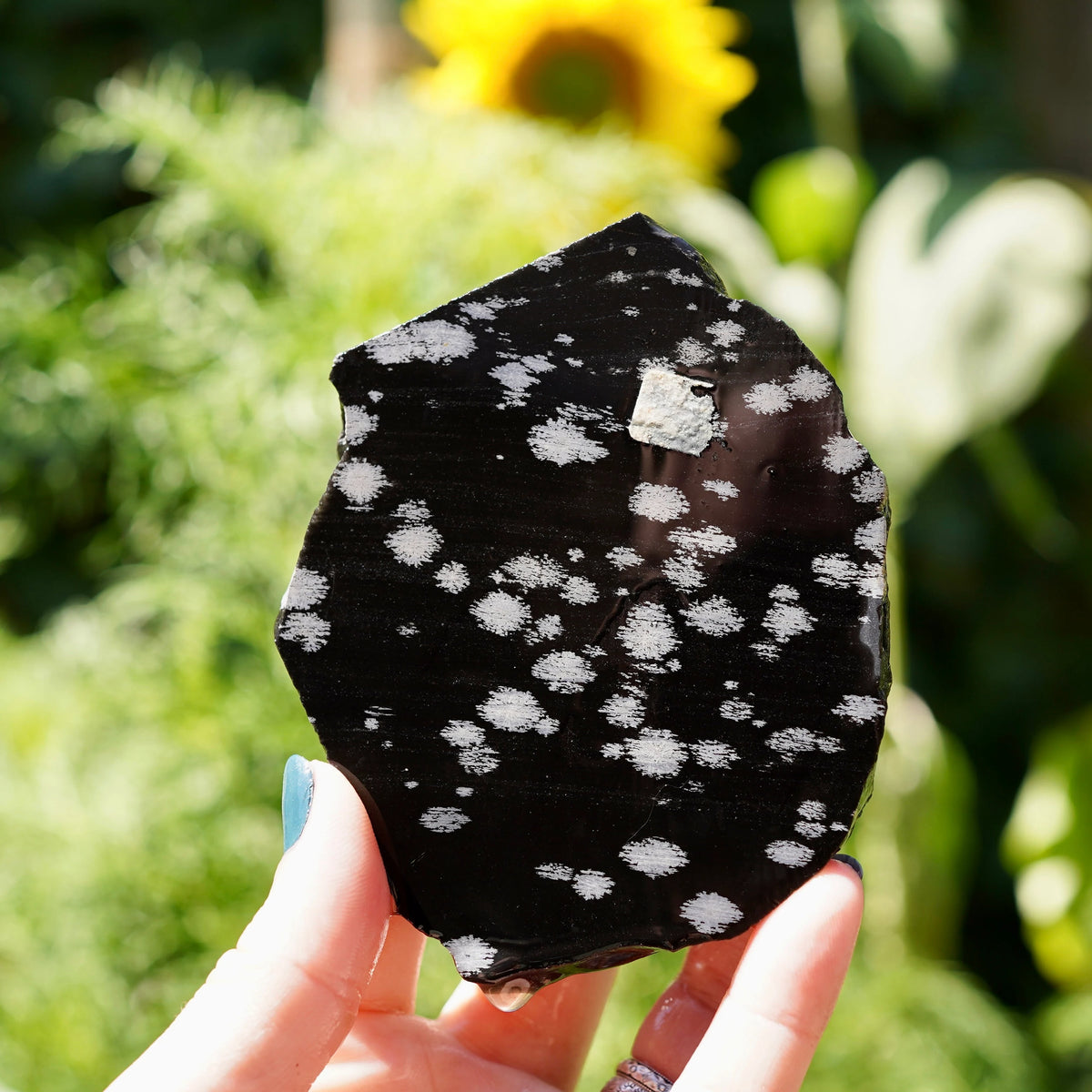
The material, examined
Glass made by a volcano
Obsidian is natural volcanic glass, commonly rich in silica. It is a mineraloid rather than a mineral species: its glassy material does not have the repeating crystal structure used to define a mineral.
USGS describes glassy margins forming as rhyolite lava cools rapidly. Not every part of a flow becomes identical glass; cooling, movement and gas release can create different textures within the same flow.
Snowflakes, bands and sheen
The pale patterns in snowflake obsidian are crystalline areas within glass, often described as spherulites. USGS explains spherulites as radiating crystals produced during devitrification—the development of crystals from glass.
Sheen and rainbow effects have their own microscopic causes. Do not assume every patterned obsidian has the same inclusions. A commercial variety name describes an appearance, not a complete analysis.
A useful material for tools and tracing
Obsidian breaks with curved, shell-like fractures that can create very sharp edges. That behavior helped make it a tool material. Its chemistry can also be compared with geological sources, allowing researchers to investigate movement and exchange.
Source attribution requires appropriate analytical data and reference samples. A black surface cannot tell you where the glass came from, or certify that a carved object is old.
Handle the edges, not just the shine
Broken edges can be far sharper than they look. Handle fragments cautiously, keep them away from children and pets, and support a larger piece instead of lifting it by a thin edge.
For a sound polished object, gentle cleaning may be enough. Avoid impact, heat and sudden temperature change. Do not use a knife-like fragment for a home demonstration or attempt lapidary work without appropriate equipment and training.
Sources & further reading
References are labeled by role. A source documenting a belief is not evidence of a medical or mineralogical effect. Reflection prompts are C&C editorial suggestions.
The cabinet