

The Specimen Library / Record
Apatite
Phosphate minerals / group name
A colorful phosphate family whose shop label often stops short of the exact species.
← Return to the Specimen Library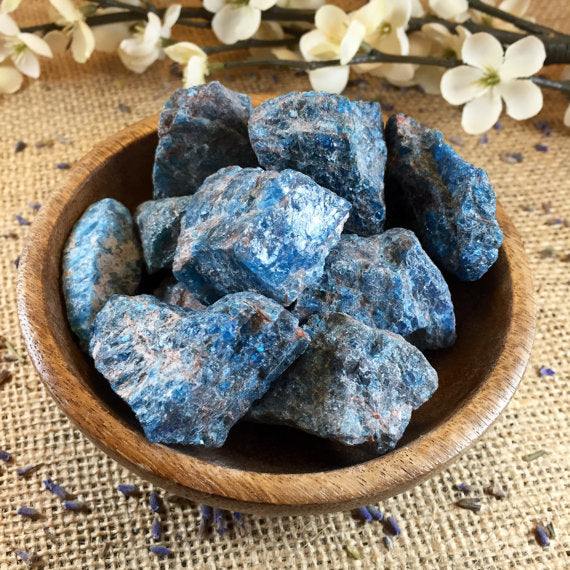
01 · The material
Natural History
Apatite minerals occur in igneous, metamorphic and sedimentary settings. Fluorapatite is one important member.
02 · Observe
Under the Loupe
Blue or green color does not identify apatite. Its lower hardness is important when comparing it with beryl or tourmaline.
03 · Ownership
Collect & Care
Avoid abrasion, knocks and harsh cleaning. Keep valuable pieces apart from harder stones.
04 · The human story
History, Lore & Tradition
Documented history
A group-level name is useful, but it should not be presented as proof of one chemical formula.
Meanings & modern crystal practice
These associations belong to spiritual traditions and personal symbolism, distinct from mineralogical facts.
C&C’s original practice notes associate this material with motivation. A small prompt to name the next manageable step. These are contemporary spiritual associations and editorial reflection suggestions, distinct from mineralogical properties.
Sources & further reading
References are labeled by role. A source documenting a belief is not evidence of a medical or mineralogical effect. Reflection prompts are C&C editorial suggestions.
- Handbook: Fluorapatite
- C&C original crystal-practice index, 2017 archive: contemporary C&C teaching and symbolic associations.
The cabinet
Filed Under
Follow the question
Go deeper
Take it with you
Field resources in development
- Collector Record · future free download
- Quick Reference · future free download
- Coloring & Discovery Page · future low-cost resource
Adjacent drawers
Related Specimens
The cabinet