

W048 / Oregon
Old-Stock Oregon Carnelian Petrified Wood
Silicified fossil wood · founder-labelled Oregon comparison
Wood and warm, translucent silica can share the same slice. This example is filed under the founder’s original description; the grain, mineral filling and surviving label each tell a different part of its story.
← Return to Western Lapidary Materials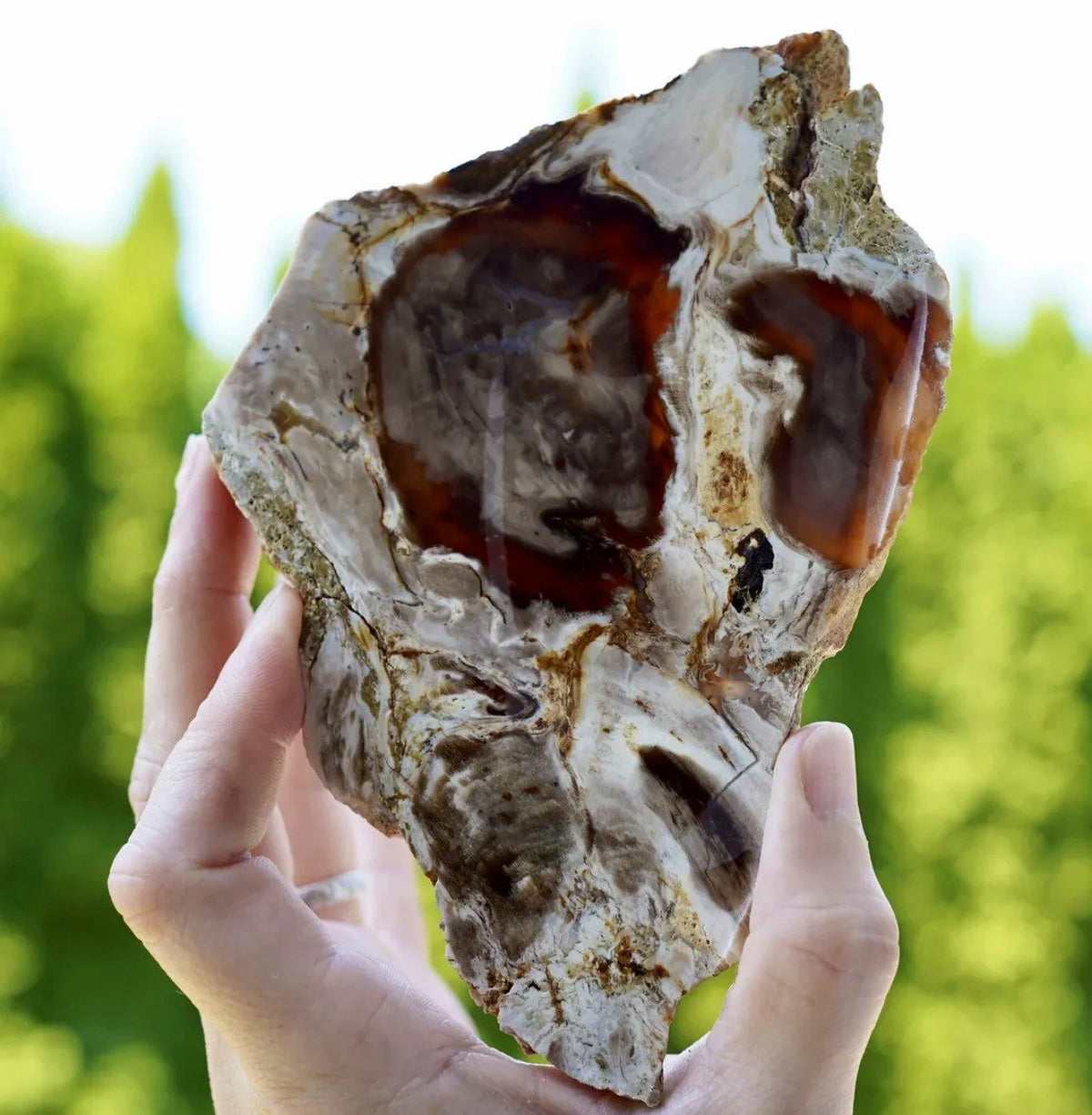
What it is
A founder-labelled fossil-wood specimen with reddish translucent silica described as carnelian. Petrified wood records mineral preservation of wood; carnelian describes red-orange chalcedony. Silicified wood may contain several silica forms, so the whole slice should not automatically be called pure carnelian.
What to look for
The photo shows dark reddish translucent-looking areas, pale matrix and darker patterned sections. Compare grain, growth structure, boundaries and mineral-filled spaces—not just the red color. Backlighting can intensify color and transparency. Microscopic wood anatomy is not established by this photograph.
At the cutting bench
Inspect both faces, the edge and every boundary between wood-textured and clearer material. Fractures, cavities and uneven mineralization can matter more than the trade name. Plan a cabochon around sound material, or retain the slice as a display specimen if cutting would remove informative structure. Polish, thickness, treatment status and cutting yield are not established here.
Under the loupe
Red chalcedony alone does not prove fossil wood, Oregon origin or a named deposit. Look for preserved wood anatomy; agate-filled limb casts can preserve an external wood-shaped mould without preserving the wood itself. An original label and collection history are needed for locality attribution, while microscopic examination may be needed for tree identification.
Source & collecting access
UNKNOWN — no exact locality was supplied, so present ownership, claims, production or collecting permission cannot be assessed. “Old stock” describes reported storage/ownership history and does not mean the source is exhausted or closed.
Status checked 4 October 2026The market notebook
UNKNOWN — no verified asking-price or completed-sale comparison specific to this founder-labelled material was established in this update. No rarity premium or valuation is implied by “old stock.”
Market researched 4 October 2026Open the field notes
How wood becomes mineral
Mineral-bearing groundwater can fill spaces in buried wood. Minerals can also replace material as it breaks down. These processes may preserve the shape and details of the original tissue, but preservation varies from piece to piece.
Silica can come from several sources, including weathering rock and volcanic ash. Without a collecting site and geological evidence, we cannot specify the burial event, silica source or age of this Oregon-labelled slice.
Carnelian is a description—not a locality
Carnelian names warm red-orange chalcedony. Iron-bearing compounds commonly contribute warm colors in silicified wood, but a photograph does not identify the pigment or silica phases in this particular slice. “Carnelian petrified wood” is useful collecting language; it does not define a tree species or a unique deposit.
Wood texture versus a wood-shaped cast
Look for repeated grain or growth structure rather than relying on an irregular outline. A mineral-filled mould left by vanished wood is a limb cast; a specimen retaining mineralized wood anatomy carries different evidence. The two can coexist, so a preserved exterior alone does not settle the internal history.
Tree-species identification is a specialist anatomical question. Avoid guessing a species from one decorative cut face.
What the old-stock label preserves
Old stock means material held from an earlier acquisition or collecting period. Record who owned it, where it was obtained, the label’s exact wording and any dates if known. It does not establish geological age, scarcity or a closed collecting area. Here, the founder’s description is retained while those details remain undocumented.
Keep the specimen—and its evidence—together
Support thin slices and separate their edges from other stones. Start with a soft brush and gentle cleaning; check for unknown fillers, coatings or repairs before soaking or using solvents. Save dry and backlit photos as different views, without treating either as a complete account of condition.
What we know—and what we don’t
FOUNDER LABEL: Oregon origin, carnelian petrified wood and old-stock description. OBSERVED: photo appearance. GENERAL SCIENCE: silicification can preserve wood through mineral infilling and replacement. UNKNOWN: exact site, age, tree identity, silica phases, treatments and documented ownership chain.
C&C Reference Collection
C&C supplied this photograph and identification for visual comparison. Keep any original label or acquisition record with the specimen. Similar color or pattern does not authenticate an unlabeled piece as Oregon wood.
Sources & Further Reading
- National Park Service · Permineralization and Replacement
Authoritative general fossilization processes and varied silica forms; not this specimen's age or deposit.
- Mustoe & Acosta, 2016 · Origin of Petrified Wood Color
Research article located in search: silica phases and evidence for iron-related color variation. Full text could not be retrieved in this pass. No specimen-specific chemical analysis.
- OSHA · Crystalline silica
General cutting/grinding dust hazards.
Cutting and grinding silica-rich stone can generate hazardous respirable dust. Use appropriate wet methods, ventilation and exposure controls; wet work alone does not guarantee safe exposure.