

The Specimen Library / History, Lore & Tradition
Malachite · Human Story
Copper carbonate / mineral species
A closer look beyond the specimen label.
← Return to Malachite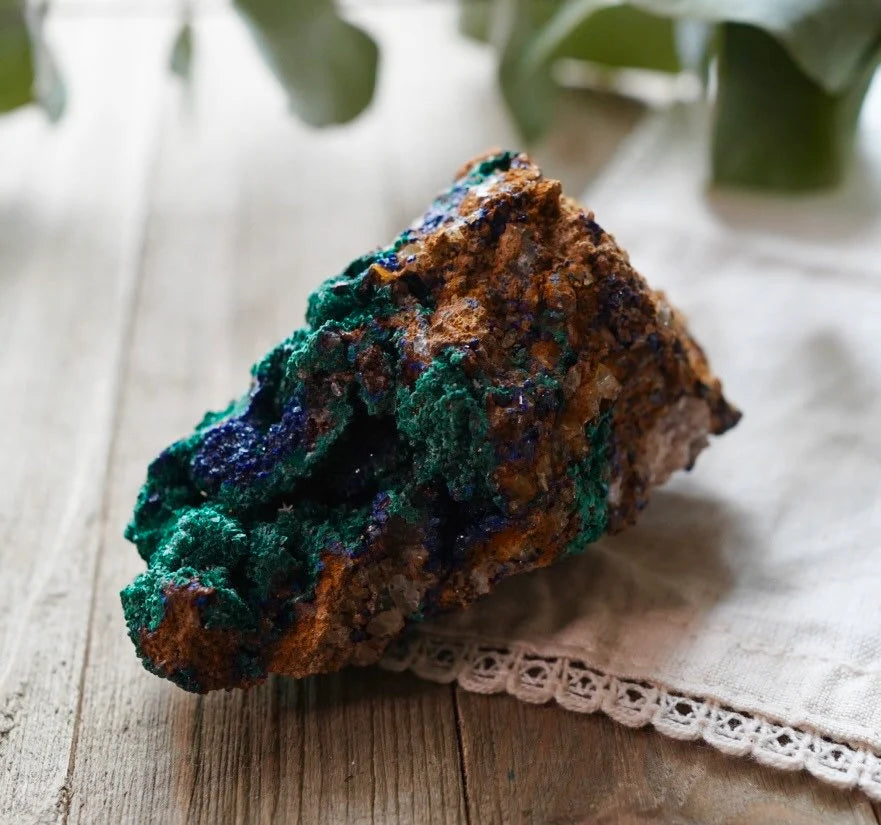
The human story, examined
Documented history, historical belief and contemporary crystal practice are different parts of the story. Each is identified here on its own terms.
Green pigment, not just green stone
The Metropolitan Museum documents malachite among the mineral pigments used in Egyptian painting. Its color has also been used in other artistic traditions. A mineral can become paint, ornament or a specimen, depending on what people choose to do with it.
Historical pigment use is not a recommendation to make pigment yourself. Modern handling should take dust and exposure seriously.
A specific work, a specific context
The Met’s record for a nineteenth-century fan by Wu Guxiang identifies malachite green and azurite blue among its pigments. That is a grounded way to encounter the mineral’s cultural story: through a dated object and a named artist.
It does not establish that every green stone was used in the same way, or that modern crystal associations came from that painting tradition.
Modern practice: change and boundaries
In contemporary crystal practice, malachite is associated with transformation, protection and personal change. Those are spiritual interpretations, not a biological cleansing effect or a promise of protection from harm.
A reflective prompt: “What pattern am I ready to stop repeating—and what boundary would help?” Keep the practice physical-material-safe: a dry stone beside a journal is enough. No elixir, dust or elaborate cleansing process is needed.
Sources & further reading
References are labeled by role. A source documenting a belief is not evidence of a medical or mineralogical effect. Reflection prompts are C&C editorial suggestions.
The cabinet