

The Specimen Library / Under the Loupe
Fluorite · Science
Calcium fluoride / mineral species
A closer look beyond the specimen label.
← Return to Fluorite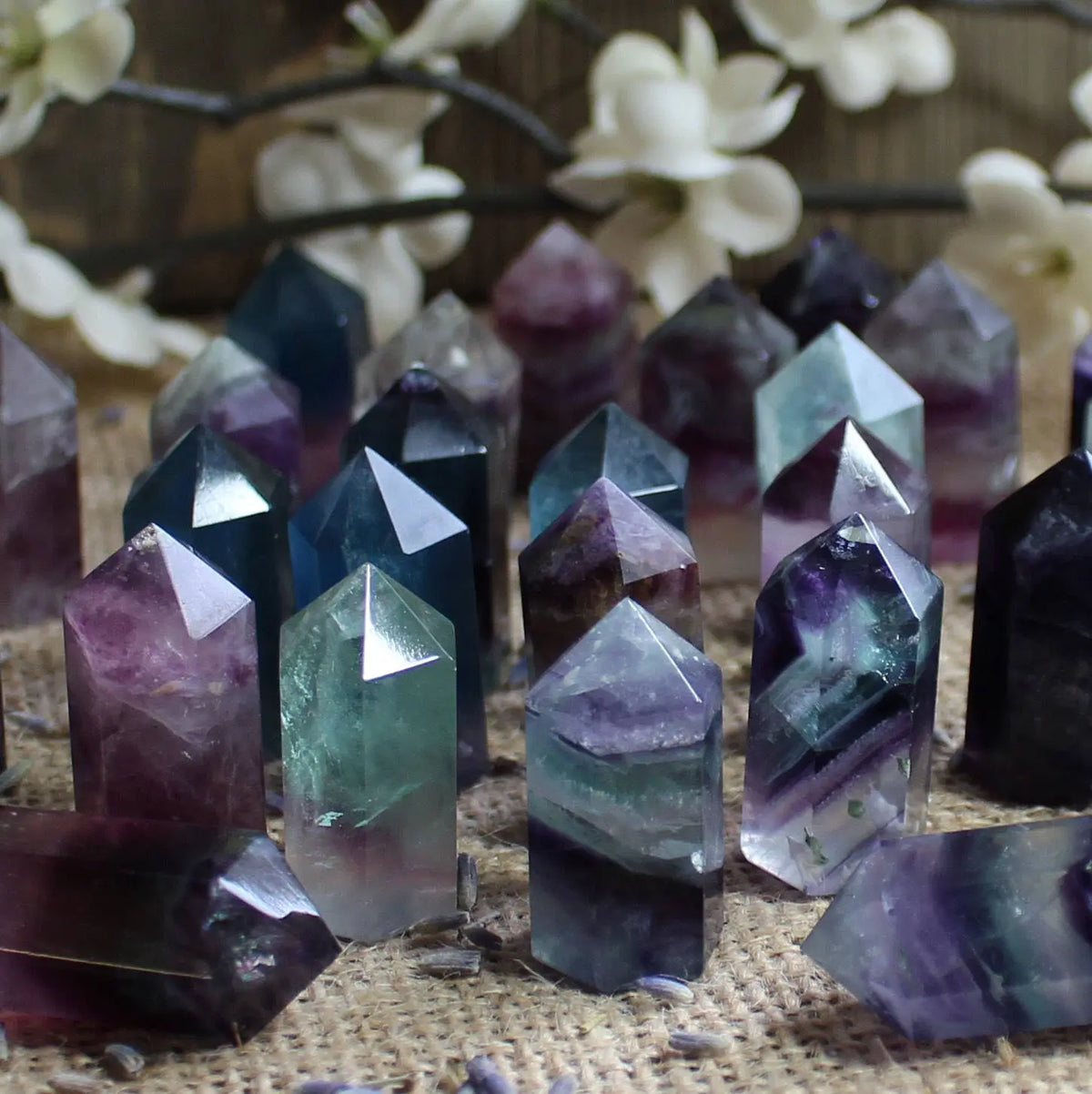
The material, examined
Faces, cleavage and broken corners
Fluorite is calcium fluoride, with cubic symmetry. It can grow as cubes or octahedra. It also has strong cleavage in four directions, producing octahedral fragments when it splits.
That means an eight-sided piece might be a grown crystal or a cleavage piece. Both are fluorite, but the description should tell you what you are seeing. Do not break a specimen to demonstrate the difference.
Color in layers
Fluorite can be purple, green, blue, yellow or colorless, sometimes within one specimen. Changes in growth conditions can produce distinct color zones. The outline of an earlier growth stage may appear inside a later one as a phantom.
Color alone is a poor identity test. A pale green stone could belong to many species; shape, cleavage, context and appropriate testing are more informative than choosing the nearest color in a chart.
Will it glow?
Fluorescence is light emitted during exposure to a suitable light source, often ultraviolet. The word is named after fluorite, but not every fluorite specimen fluoresces, and different wavelengths can produce different responses.
Do not assume a glow proves fluorite, or that no glow disproves it. If using ultraviolet equipment, follow its eye and skin precautions. An ordinary visible-light photograph cannot document a UV response.
A gentle display specimen
At Mohs 4, fluorite is easier to scratch than quartz, and cleavage adds another vulnerability. Avoid a bowl of mixed stones that can knock against one another. A stable padded base is more sensible than a precarious stack.
Use a soft dry brush as the first cleaning choice for a delicate specimen. Avoid heat, acids, ultrasonic cleaning and prolonged strong light. Matrix and associated minerals can be more fragile than the fluorite itself.
Sources & further reading
References are labeled by role. A source documenting a belief is not evidence of a medical or mineralogical effect. Reflection prompts are C&C editorial suggestions.
The cabinet